 Kamalesh Arumugam
Everyone talks about funding.
Very few talk about survival.
But some of the world’s most respected companies?
They were built with 0 outside money.
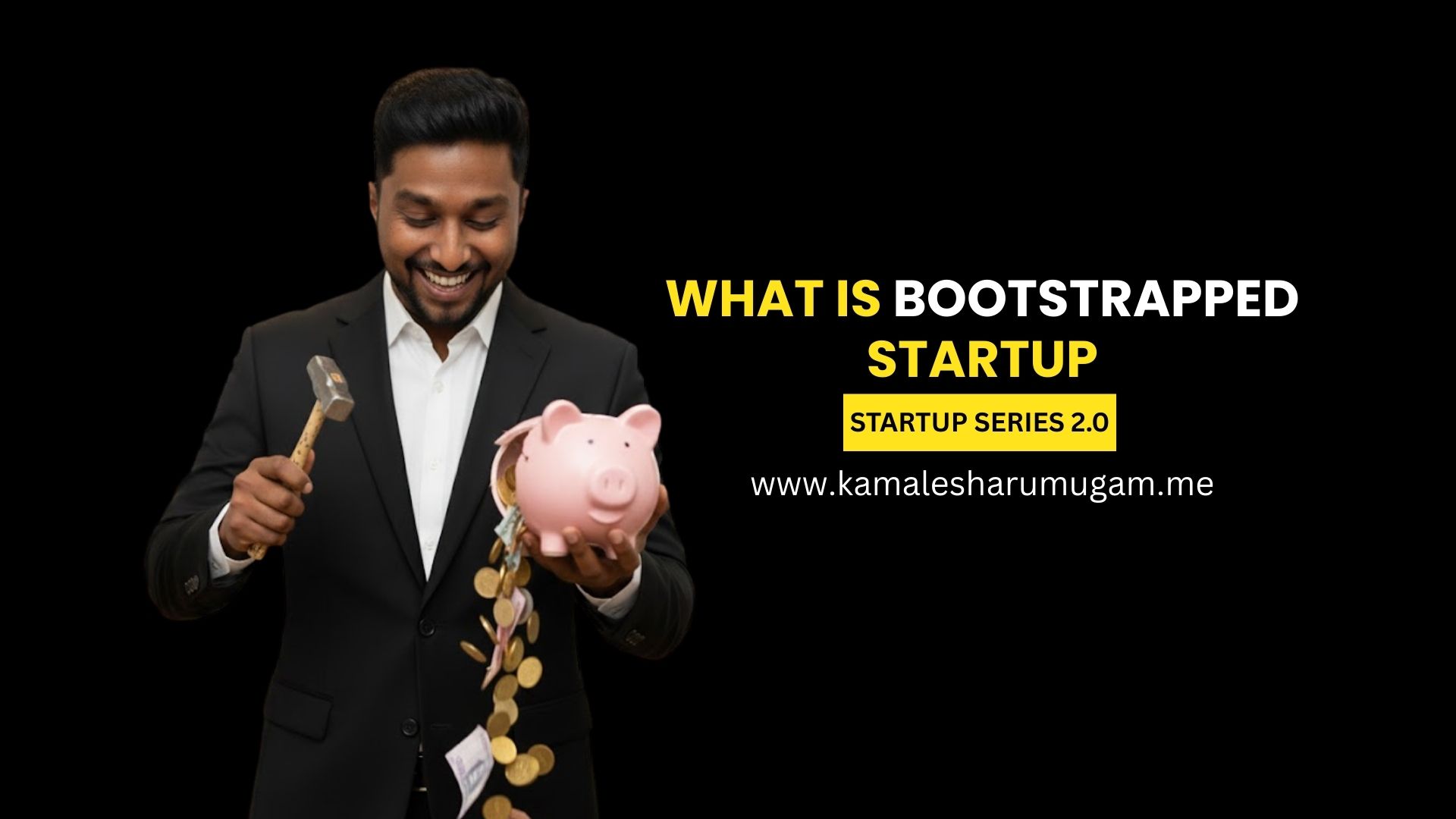
Let’s decode the bootstrapped startup model, the startup path that demands courage, clarity, and consistency.
1. What Does “Bootstrapped” Actually Mean?
A bootstrapped startup is built using:
✔ Founder’s own savings
✔ Early revenue
✔ Customer cash flow
✔ Profit reinvestment
No VC.
No angel investor.
No dilution.
No “burn rate.”
Just pure execution.
💡 Bootstrapping = Building a business the hard way but the smart way.
2. Why Bootstrapping Creates Stronger Founders?
Bootstrapped founders learn skills that funded founders often skip:
How to sell
How to market without spending
How to get customers fast
How to survive without luxury
How to run operations efficiently
How to build a profitable model from Day 1
This pressure builds diamond founders, not PowerPoint founders.
💡 When you don’t have funds, you become resourceful.
When you have too many funds, you become careless.
3. Why Bootstrapped Startups Are More Profitable?
Bootstrapped startups usually focus on:
Revenue first
Profit first
Customers first
Sustainability first
Value creation, not valuation
Companies like Zerodha, Zoho, Mailchimp, GitHub, Shutterstock didn’t raise money early yet became global giants.
💡 Because they focused on customers, not investors.
5. The Advantages of Bootstrapping
✔ Full Ownership
Your company = your rules.
No Anti-dilution clause. No board pressure. If you don’t know what is Anti-dilution clause, Please read my blog: https://kamalesharumugam.me/anti-dilution-clause/
✔ Creative Freedom
Build at your pace.
Pivot when needed.
Make decisions instantly.
✔ High Profit Culture
You spend only when necessary.
You build lean.
You scale smart.
✔ Real Validation
The market pays you.
Not an investor.
Customers become your investors.
6. The Challenges of Bootstrapping (Truth Pill)
✘ Slow Growth
No rocket fuel.
Growth is steady, not explosive.
✘ Limited Cash
You can’t hire fast.
You can’t burn money on experiments.
✘ Founder Stress
You handle everything.
You wear 10 hats.
✘ Competition With VC-Funded Giants
You can’t outspend them.
But… you can outsmart them.
💡 Bootstrapped startups don’t grow fast — they grow right.
6. When Should You Bootstrap?
Bootstrapping is ideal if:
✔ Your startup can generate early revenue
✔ Your business doesn’t require heavy infrastructure
✔ You want long-term control
✔ You believe in slow, stable growth
✔ You want to avoid unnecessary dilution
Great for:
SaaS
Consulting
Agencies
D2C
Education startups
Small tech products
Marketplaces
7. When Bootstrapping Might NOT Be Ideal?
Avoid bootstrapping if your idea needs:
✘ Manufacturing
✘ Massive R&D
✘ Warehousing
✘ Logistics network
✘ Deep tech
✘ Hardware development
Example: SpaceX, Tesla, Flipkart, Swiggy these can’t be bootstrapped.
8. The Bootstrapped Formula That Wins
Here’s the formula used by 7-figure bootstrapped companies:
Start small (MVP)
Sell early
Keep costs low
Use customer money to grow
Outlearn, not outspend
Build a loyal community
Scale slowly & sustainably
💡 Bootstrapped founders don’t chase big revenues.
They chase consistent revenues.
9. The Bootstrapped Mindset (Very Different From VC Mindset)
Funded founder mindset:
➡ Growth first, revenue later
Bootstrapped founder mindset:
➡ Revenue first, growth later
Funded founder:
“How fast can we scale?”
Bootstrapped founder:
“How long can we survive?”
Different mindset.
Different outcomes.
Different type of success.
10. Final Thought: Why Bootstrapping Still Wins in 2025
Because the funding winter is real.
VCs are selective.
Markets are unpredictable.
But bootstrapped startups?
They survive.
They grow.
They stay profitable.
And most importantly…They stay in control.
Just like Zerodha:
₹0 funding → ₹8000+ crore profit company.
That’s the POWER of bootstrapping.


 Kamalesh Arumugam