 Kamalesh Arumugam
Competition grabs our attention. From sports to shopping, humans are wired to compare, debate, and pick a winner. But what if I told you that some of the fiercest rivalries you see aren’t real?
Many top brands don’t just compete with others they create competition for themselves. This isn’t luck; it’s strategy. Let’s break it down and explore how startups can use this “self-competition” strategy to their advantage.
The Psychology Behind Rivalries
Our brains love choice—but too much choice creates anxiety. To simplify decisions, we naturally focus on two strong players in any category: Hero vs Rival.
This is why people debate endlessly:
- Nike vs Adidas
- iOS vs Android
- Coca-Cola vs Pepsi
- Swiggy vs Zomato
What most don’t realize is that some of these rivalries are designed by the same company.
Case Studies of Self-Competition Stategy
Tech & Smartphones
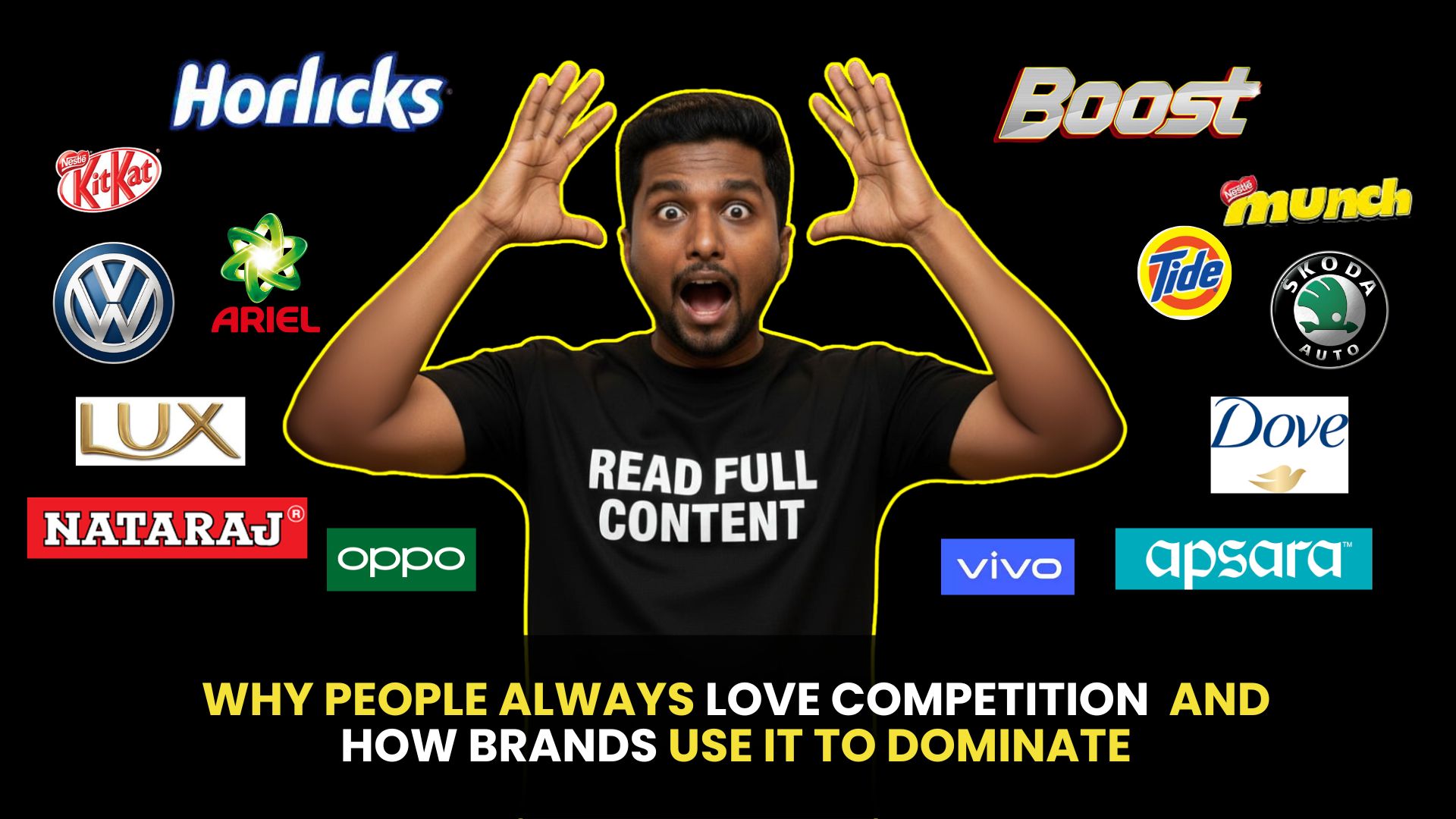
- BBK Electronics owns Oppo, Vivo, OnePlus, Realme, iQOO, and Nothing. Each brand targets a slightly different audience, yet all compete in the same smartphone space. The result? BBK dominates mid-range to premium phones globally.
- Meta Platforms: Instagram, Facebook, WhatsApp, and Messenger all compete for user attention. Fans may debate which platform is better, but Meta wins in every scenario.
Takeaway for startups: Segment your offerings. Even if you target slightly overlapping audiences, multiple products allow you to capture a larger share of the market.
FMCG & Beverages
- Coca-Cola dominates fizzy drinks with Sprite, Fanta, and Thums Up.
- PepsiCo does the same with Mountain Dew and 7Up.
- Even within the chocolate space, Nestlé positions KitKat and Munch differently to capture both snack and indulgence markets.
Takeaway for startups: Offer product variations that target different customer needs. You don’t need to fight competitors head-on if you can fight yourself effectively.
These all are some examples.
How Startups Can Apply the Self-Competition Strategy Effectively
The self-competition strategy isn’t just for giant brands like Coca-Cola or BBK Electronics. Startups can adopt it to accelerate growth, capture attention, and outpace competitors—if done strategically. Here’s how:
Start with Clear Audience Segmentation
How to Apply:
- Identify 2–3 distinct customer personas within your target market.
- Launch multiple products or variations catering to each persona.
Why It Helps:
- Each product appears tailored for a specific audience.
- Increases chances of conversion as customers feel the product “fits” their needs.
Impact on Growth:
Faster traction as you appeal to multiple segments simultaneously.
Example: A food delivery startup can launch a “budget meal” app and a “premium meal” app, both feeding into the same backend operations.
Create Differentiated Offerings to Spark Conversations
How to Apply:
- Make products slightly different but comparable (price, features, design).
- Encourage natural debates online—reviews, polls, or social media engagement.
Why It Helps:
- People talk about your products for free, acting as brand ambassadors.
- Social proof grows organically through discussions and reviews.
Impact on Growth:
Viral effect can attract customers faster than traditional marketing.
Example: Two coffee blends from the same startup could ignite “which is stronger?” debates on Instagram.
Dominate Your Niche Before Others Enter
How to Apply:
- Identify your category’s “high-demand gaps.”
- Launch multiple products quickly to cover those gaps before competitors do.
Why It Helps:
- Reduces market space available for competitors.
- Customers perceive your brand as the default leader.
Impact on Growth:
Rapid market share capture.
Example: A startup selling personal care products can launch two shampoos targeting different hair concerns (dry vs oily) and gain faster recognition than a single-product competitor.
Use Internal Competition to Learn Fast
How to Apply:
- Monitor which products perform better in real-time.
- Adjust features, pricing, or marketing accordingly.
Why It Helps:
- You gather market insights faster than competitors who rely on single-product launches.
- Reduces risk as failures are contained internally without losing market share.
Impact on Growth:
Accelerates product-market fit.
Example: Two app versions competing for user engagement can reveal the most effective UI/UX in weeks instead of months.
Scale Faster Than Competitors
How to Apply:
- Launch products in parallel, not sequentially, to occupy more mindshare.
- Use existing operations to support multiple offerings efficiently.
Why It Helps:
- Each product acts as a growth engine while reinforcing the others.
- You appear omnipresent in the customer’s mind.
Impact on Growth:
Faster awareness and adoption compared to a competitor launching one product at a time.
Example: A startup launching both budget and premium e-commerce platforms can capture users at different price points faster than a single-platform competitor.
Key Benefits Summarized:
| Benefits | How it Helps |
| Multiple Customer Segments | Reach more audience simultaneously |
| Organic Marketing | Sparks debates and conversations |
| Market Domination | Covers category gaps before competitors |
| Data-Driven iteration | Learn what works faster |
| Customer Loyalty | Cross-product engagement |
| Rapid Scaling | Launch multiple products in parallel |
Startups using the self-competition strategy don’t just compete, they control the conversation, dominate the category, and grow faster than single-product competitors. By carefully designing multiple offerings and segmenting your audience, you can accelerate customer acquisition, boost revenue, and create a defensible position in your market.


 Kamalesh Arumugam